
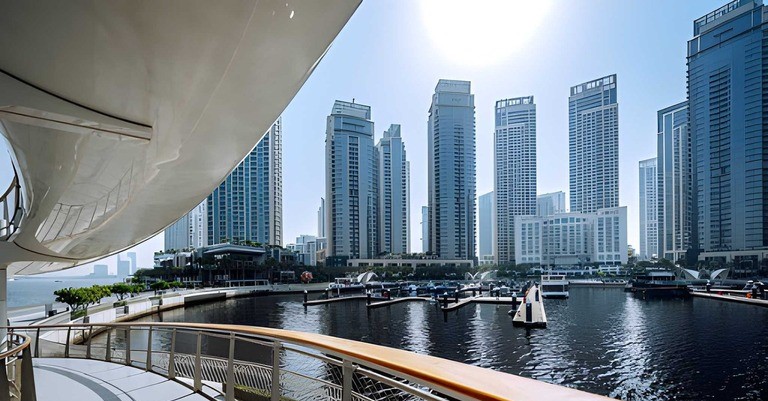
The United Arab Emirates is rapidly advancing smart city development through major investments and digital transformation initiatives. The UAE Smart Cities market is projected to reach USD 312.20 million by 2029, growing at a CAGR of 9.58% from 2025–2029 (Statista Market Insights, 2026). Feasibility challenges for smart city projects remain a key concern despite strong government support and funding. The UAE has committed over AED 50 billion to smart city initiatives under Vision 2021, yet issues such as infrastructure integration, cybersecurity risks, technology incompatibility, and workforce shortages continue to affect project implementation and long-term success.
Understanding the Scale of Urban Digital Transformation in the UAE
Digital transformation in the UAE is being driven by a clear government mandate. Initiatives such as Smart Dubai, the Abu Dhabi Smart City programme, the UAE Digital Government Strategy 2025, and the UAE Centennial 2071 plan collectively define the nation’s long-term commitment to technology-led urban growth. Dubai achieved a major milestone as the first government in the world to become fully paperless in its internal operations in 2021 (Dubai Paperless Strategy), and currently ranks among the top 30 smart cities globally. However, translating ambitious government vision into operational smart city infrastructure involves layers of technical, financial, and organisational complexity that standard project planning often fails to anticipate.
Urban digital in the UAE is not a single event; it is a continuous process involving thousands of interconnected decisions. Project leaders must evaluate how new digital systems interact with existing physical and digital infrastructure, and this assessment must begin at the feasibility stage, not during implementation.
Infrastructure Readiness Assessment: The First Line of Defence
One of the most frequently underestimated feasibility challenges is the readiness of existing infrastructure to support new technology. In the UAE, high integration costs fragment the smart device vendor landscape, with integration and implementation costs reaching up to 18% of total project budgets in complex, multi-vendor environments, according to industry benchmarks for the UAE market. An infrastructure readiness assessment is therefore not simply a technical exercise; it is a financial risk management tool.
- Availability and quality of 5G network coverage across the project zone
- Compatibility of legacy building management systems with modern IoT platforms
- Capacity of existing data centres and cloud infrastructure to handle increased data loads
- State of utility networks, including smart grid readiness for energy management
- Physical cabling, fibre-optic connectivity, and sensor deployment feasibility
In many parts of the UAE, particularly in older urban districts and rapidly expanding industrial zones, infrastructure readiness gaps are a primary source of project delay. Identifying these gaps early through a structured assessment can prevent cost overruns and ensure that the feasibility study delivers reliable data for decision-making.
Key Feasibility Challenges for Smart City Projects in the UAE (2026)
| Challenge Area | Primary Risk | UAE-Specific Impact |
| Infrastructure Readiness | Legacy system integration gaps | 18% of project budgets absorbed by integration costs |
| Cybersecurity | Data breaches on connected assets | Digital systems in UAE smart city projects can manage assets valued at AED 500,000 or more per project segment, increasing the potential financial impact of a cybersecurity breach. |
| Stakeholder Alignment | Fragmented authority and slow approvals | Multi-entity governance across seven Emirates |
| Technology Stack Compatibility | Vendor lock-in and system fragmentation | Elevated costs averaging 18% of project budgets |
| Skilled Workforce Shortage | Talent gaps slowing delivery timelines | Industry estimates suggest a shortfall of approximately 50,000 specialized workers (including data scientists, IoT engineers, and cybersecurity analysts) by 2028, based on current project pipelines and talent production rates, as the 2026 target was not officially tracked. |
| Sustainability Compliance | Net-Zero 2050 mandate adds design costs | Mandatory green building codes across all new projects |
Stakeholder Feasibility Analysis: Who Has Authority, and Who Has Influence?
Smart city projects in the UAE involve a complex web of stakeholders, federal ministries, emirate-level authorities, private technology vendors, community groups, and international investors. Stakeholder feasibility is the structured process of identifying who can support, block, or redirect a project at any given stage. In a federal structure like the UAE’s, where governance responsibilities are shared between seven individual Emirates, this analysis is especially critical.
A thorough stakeholder feasibility analysis should address the following questions:
- Which regulatory bodies hold authority over land use, data governance, and digital infrastructure licensing?
- What are the procurement timelines for government approvals in each Emirate?
- How are community needs and resident feedback formally incorporated into the planning process?
- Are there competing interests between private vendors and public sector entities?
- What mechanisms exist for resolving disputes between federal and local government stakeholders?
Without this level of stakeholder mapping, project teams frequently discover mid-delivery that approvals they assumed were in place require additional layers of authorisation. In the UAE, this issue is compounded by the diversity of regulatory frameworks across different Emirates, making feasibility analysis a non-negotiable component of project planning.
Technology Stack Compatibility: The Hidden Risk
They are among the most technical, yet most consequential, of the feasibility for smart city projects. The UAE is investing heavily in IoT sensors, AI-driven analytics, autonomous transport systems, and blockchain-based governance platforms. However, many of these technologies are sourced from different vendors and built on incompatible protocols, resulting in fragmented deployments that limit data sharing and reduce system efficiency.
The UAE AI in Construction Project Management market was valued at approximately USD 1.2 billion in 2025 (latest available data as of April 2026), with continued growth expected, with projections indicating that 50% of construction projects will utilise AI-driven management tools in the near future. Yet, as of 2025, approximately 30% of SMEs in the UAE reported leveraging AI in at least one business function, according to industry surveys. in part because of compatibility barriers that prevent smaller operators from integrating their systems with larger urban platforms.
Critical areas where the technology stack must be assessed include:
- API interoperability between city management platforms and third-party applications
- Data format standardisation across sensor networks and analytics dashboards
- Cloud versus on-premise infrastructure decisions and their long-term cost implications
- Firmware and software update cycles across large-scale IoT deployments
- Regulatory compliance for data localisation and cross-border information flows
Feasibility Study Methodologies: Choosing the Right Framework
No single feasibility study methodology is sufficient for evaluating the full range of feasibility challenges. UAE project teams are increasingly adopting a hybrid approach, combining quantitative financial models with qualitative stakeholder and regulatory assessments. The specific nature, scale, and risk profile of each project should drive the selection of methodologies.
| Methodology | Core Focus | Best Suited For |
| Cost-Benefit Analysis (CBA) | Quantifying urban innovation ROI against capital expenditure | Large-scale infrastructure and transport projects |
| SWOT Analysis | Stakeholder feasibility across all project phases | Governance and regulatory alignment projects |
| Technology Readiness Level (TRL) | Technology stack compatibility and maturity assessment | IoT and AI-driven smart infrastructure pilots |
| Monte Carlo Simulation | Smart city risk mitigation through probability modelling | Projects with high cost and schedule uncertainty |
| Infrastructure Readiness Assessment | Digital backbone evaluation against project requirements | Urban digital transformation initiatives in legacy zones |
Each methodology listed above has a distinct role. Monte Carlo simulations are particularly valuable in the UAE context, where material price volatility and labour availability can introduce significant variance into project cost estimates. For the UAE construction market, which was valued at approximately USD 45.8 billion in 2025 and is projected to reach USD 69 billion by 2034, according to industry forecasts, rigorous feasibility modelling is not a competitive advantage; it is a financial necessity.
Smart City Risk Mitigation: Building Resilience Into the Plan
It requires identifying potential failure points before they materialise. In the UAE, risks are categorised into three broad types: technical risks (system failures, data breaches), financial risks (cost overruns, delayed ROI), and governance risks (regulatory changes, stakeholder disputes). Each category demands a specific mitigation strategy embedded within the feasibility plan.
The following risk mitigation measures are particularly relevant to UAE smart city projects in 2026:
- Establishing clear data governance frameworks aligned with UAE cybersecurity regulations
- Adopting modular technology architectures that allow component replacement without system-wide disruption
- Building contingency budgets of at least 15–20% into capital expenditure plans, consistent with UAE infrastructure project risk guidelines.
- Securing long-term service agreements with multiple technology vendors to reduce dependency risk
- Conducting regular third-party audits of smart infrastructure systems during and after deployment
- Integrating Net Zero 2050 compliance requirements into design specifications from project initiation
The UAE’s Net Zero by 2050 Strategic Initiative mandates that all new projects adhere to strict green building codes and sustainability standards. This adds a layer of complexity to design and material selection that must be quantified during the feasibility stage. Projects that fail to account for these requirements at the planning phase frequently face costly redesigns and regulatory penalties during construction.
Urban Innovation: Measuring Value Beyond Financial Returns
Investors and government authorities in the UAE are increasingly focused on urban innovation ROI, the measurable return generated by smart city investments across economic, environmental, and social dimensions. Traditional financial ROI calculations are insufficient for smart city projects because many of the benefits, such as reduced carbon emissions, improved public safety, and enhanced quality of life, do not appear directly on a balance sheet.
Urban innovation in the UAE context typically includes the following dimensions:
- Economic output: Job creation, property value appreciation, and private sector investment attraction
- Operational efficiency: Reductions in government service delivery costs through automation
- Environmental performance: Measurable progress toward UAE Net Zero 2050 targets
- Social impact: Improvements in healthcare access, transportation convenience, and citizen satisfaction
- Resilience value: The long-term cost savings from building systems that can adapt to climate extremes
The UAE’s smart city programmes have already demonstrated that urban ROI is achievable. AI-driven project management tools have been projected by multiple industry sources to reduce construction sector costs by 15–25% in pilot implementations, though full-scale validation is ongoing. When evaluated comprehensively, the return on smart city investment in the UAE extends well beyond the financial, creating lasting value for residents, businesses, and future generations.
UAE Smart City Market – Key Statistics Snapshot (2026)
| Metric | Figure | Source / Context |
| UAE Smart Cities Market CAGR (2023–2029) | 16.5% | Research & Markets, 2024 |
| UAE Smart Cities Revenue (2025) | USD 216.50 million | Statista Market Forecast 2025 |
| Projected Market Volume by 2029 | USD 312.20 million | Statista, 9.58% CAGR (2025–2029) |
| Annual UAE Smart Infrastructure Spend | USD 3.9 billion | YCP Group Smart City Consulting Report |
| UAE AI Construction Market Value | USD 1.2 billion | Research And Markets, April 2026 |
| SMEs Currently Leveraging AI in the UAE | Only 30% | Research And Markets, April 2026 |
The Workforce Gap: A Feasibility Risk Often Overlooked
One dimension of the feasibility challenges that receives insufficient attention is human capital. Estimates indicate that the UAE needs to upskill or import more than 50,000 specialised workers by 2026 to meet the demands of its project pipeline. This shortage spans smart systems engineers, data scientists, cybersecurity specialists, and urban planners with digital expertise. When a project’s feasibility study does not account for talent availability, delivery timelines become unreliable, and costs escalate as organisations compete for a limited pool of qualified professionals.
To address this challenge, UAE project developers are advised to incorporate workforce planning as a formal element of the feasibility study, including timelines for hiring, training, and knowledge transfer that align with project milestones.
How Insights UAE Can Help You?
Navigating the feasibility challenges requires more than a standard consulting engagement; it requires partners with deep, verified knowledge of the UAE’s regulatory environment, technology ecosystem, and stakeholder landscape. Insights UAE offers specialised feasibility consulting services designed for the complexity of the UAE market in 2026.
Our services are structured to address every critical dimension of your project’s feasibility needs:
- Stakeholder mapping and alignment workshops that identify and resolve authority gaps before they affect timelines
- Smart city risk mitigation frameworks built around UAE-specific legal, financial, and operational risk categories
- Urban innovation models that quantify value across financial, environmental, and social dimensions for government and investor reporting
- Workforce gap analysis integrated into project feasibility timelines and budget planning
FAQs
Q1. What are the most common feasibility challenges for smart city projects in the UAE?
Infrastructure gaps, cyber risks, stakeholder misalignment, tech incompatibility, and skill shortages.
Q2. How important is a feasibility study for smart city projects in the UAE?
Essential identifies technical, financial, and regulatory risks before capital is committed.
Q3. How is urban innovation ROI measured for UAE smart city investments?
Economic output, operational savings, Net Zero 2050 performance, and resident satisfaction.
Q4. What feasibility study methodologies are best suited for UAE smart city projects?
Hybrid: Cost-Benefit Analysis, Readiness Assessment, Monte Carlo Simulation, and Feasibility Analysis.
Q5. How does the UAE’s Net Zero 2050 mandate affect smart city feasibility?
Adds mandatory sustainability requirements; non-compliance incurs redesign costs and penalties.
Q6. What is the current UAE smart city market size and growth rate?
USD 216.5M (2025) to USD 312.2M by 2029 at 9.58% CAGR (Statista); broader market at 16.5% CAGR.


